
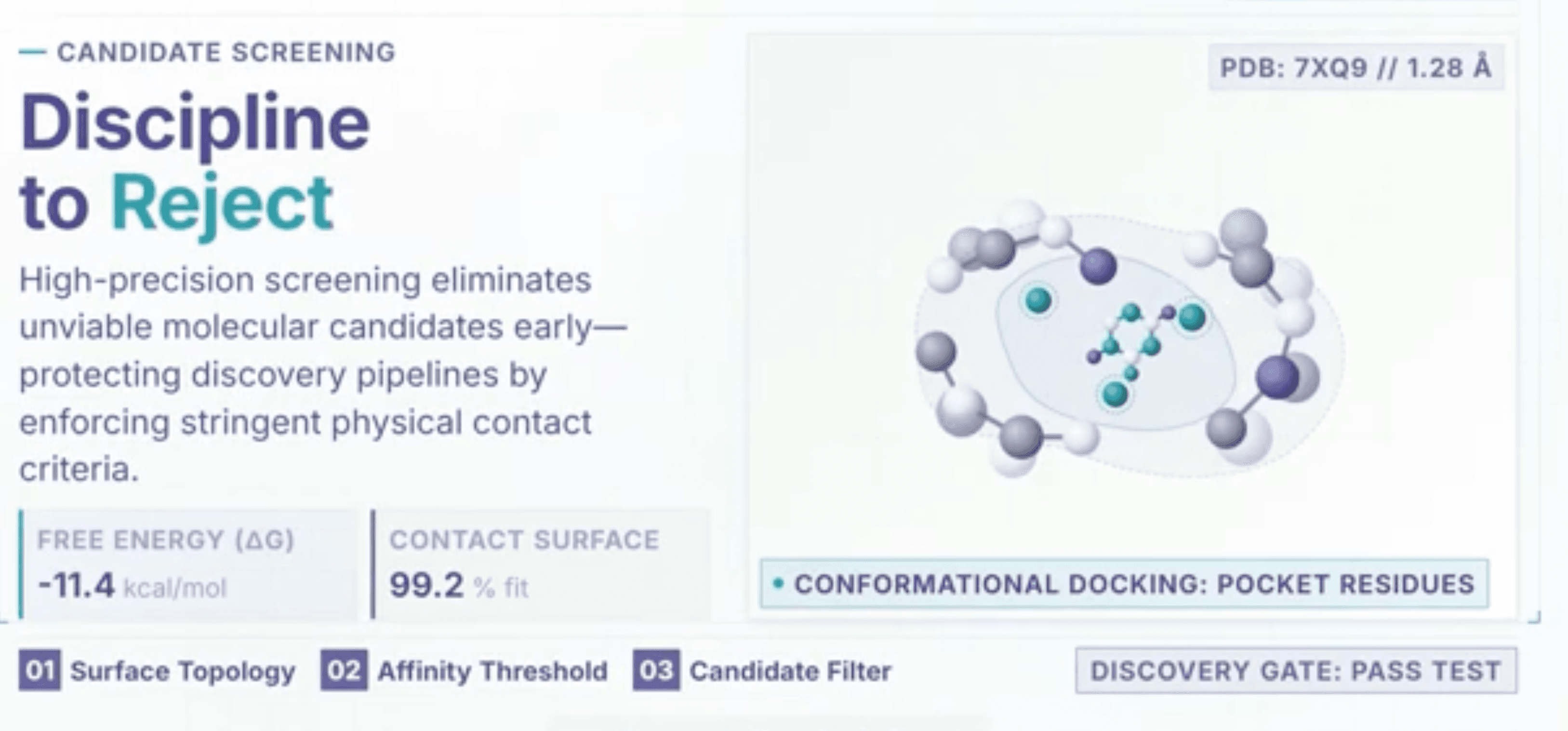
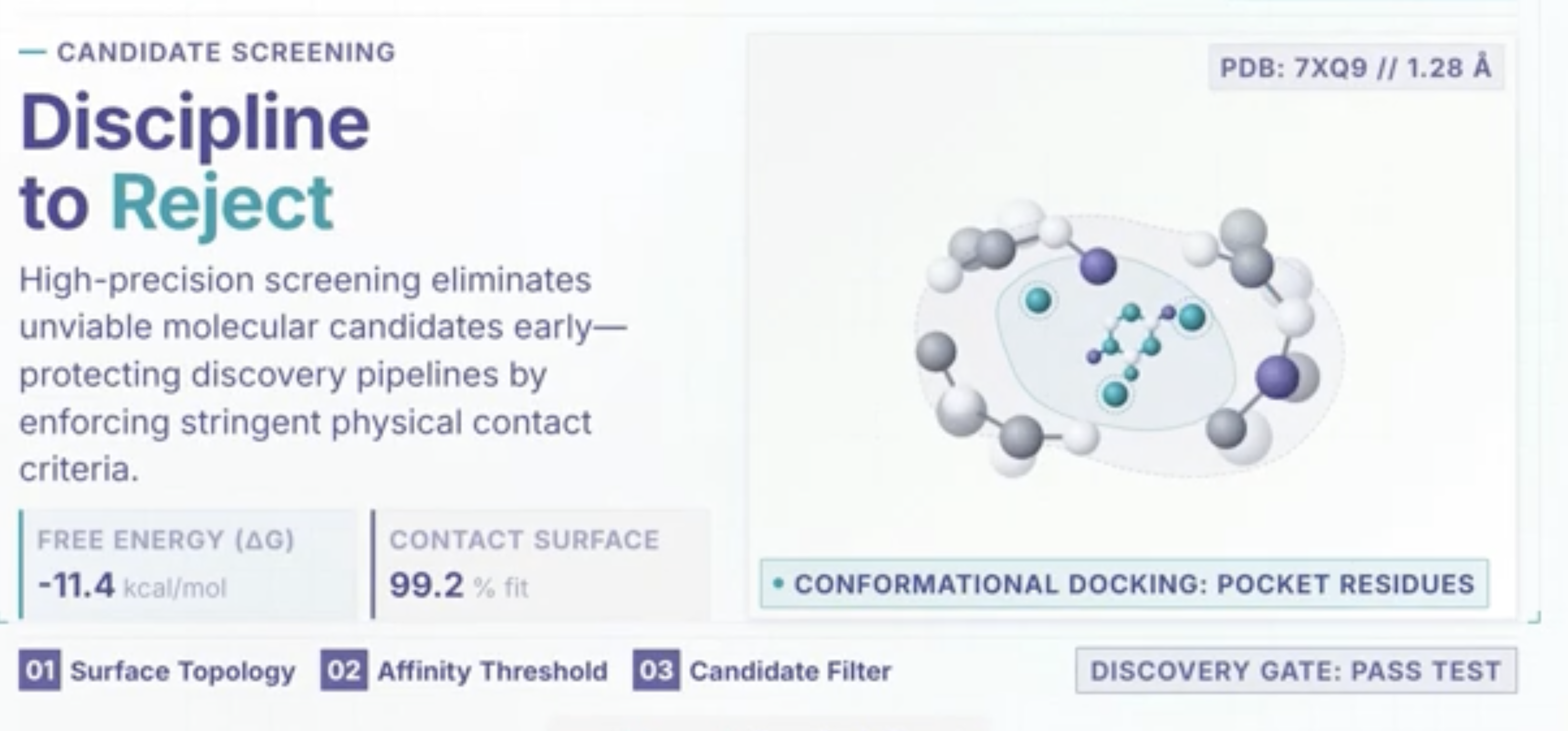
The real question in AI-driven drug discovery is not how much it can generate. It is how much
it is willing to throw away.
The industry has settled on a comfortable question: can a model design a better molecule? It is
comfortable because the answer is trending toward yes, and because a better molecule feels like the
whole game. It is the wrong question, or at least a shallow one. A generative system that proposes ten
thousand candidates has not done anything difficult. Proposing is cheap now. The difficult part, the part that actually determines whether a discovery program is worth anything, is the discipline to kill the candidates that do not survive contact with a real test, and to know exactly why each one died.
Trustworthiness in science is not set by what a method produces. It is set by what it is willing to reject. A hypothesis that cannot die is not a hypothesis. Consider a claim from the ferroptosis literature: that the curvature of a cell membrane could physically amplify the chain reaction of lipid peroxidation, so that the geometry of the membrane, not just its
chemistry, sets the speed of cell death. It is an interesting idea. What makes it a scientific idea, rather than a story, is that it can specify the exact measurement that would end it. Peroxidation rate in small, high-curvature vesicles versus large, low-curvature ones, at identical composition and identical radical flux. A threshold below which the effect is declared absent. A direction that, if reversed, disproves the mechanism outright regardless of the size of the effect.
The value of a hypothesis lives in that specification. A claim engineered to absorb any result is worthless no matter how sophisticated it sounds, because there is no world in which it is wrong, which means there is no world in which being right tells you anything.
The honest version of a hypothesis names three informative outcomes and no null result: every way the experiment can land teaches you something and sends you somewhere. The seductive version quietly reserves the right to reinterpret failure as partial success. In a manual research program a good scientist catches this by instinct. In an automated one that generates hypotheses faster than any human can read them, the instinct