
We've identified a new principle in genomics that may explain why targeted therapies keep failing.
We call it Deterministic Convergence.
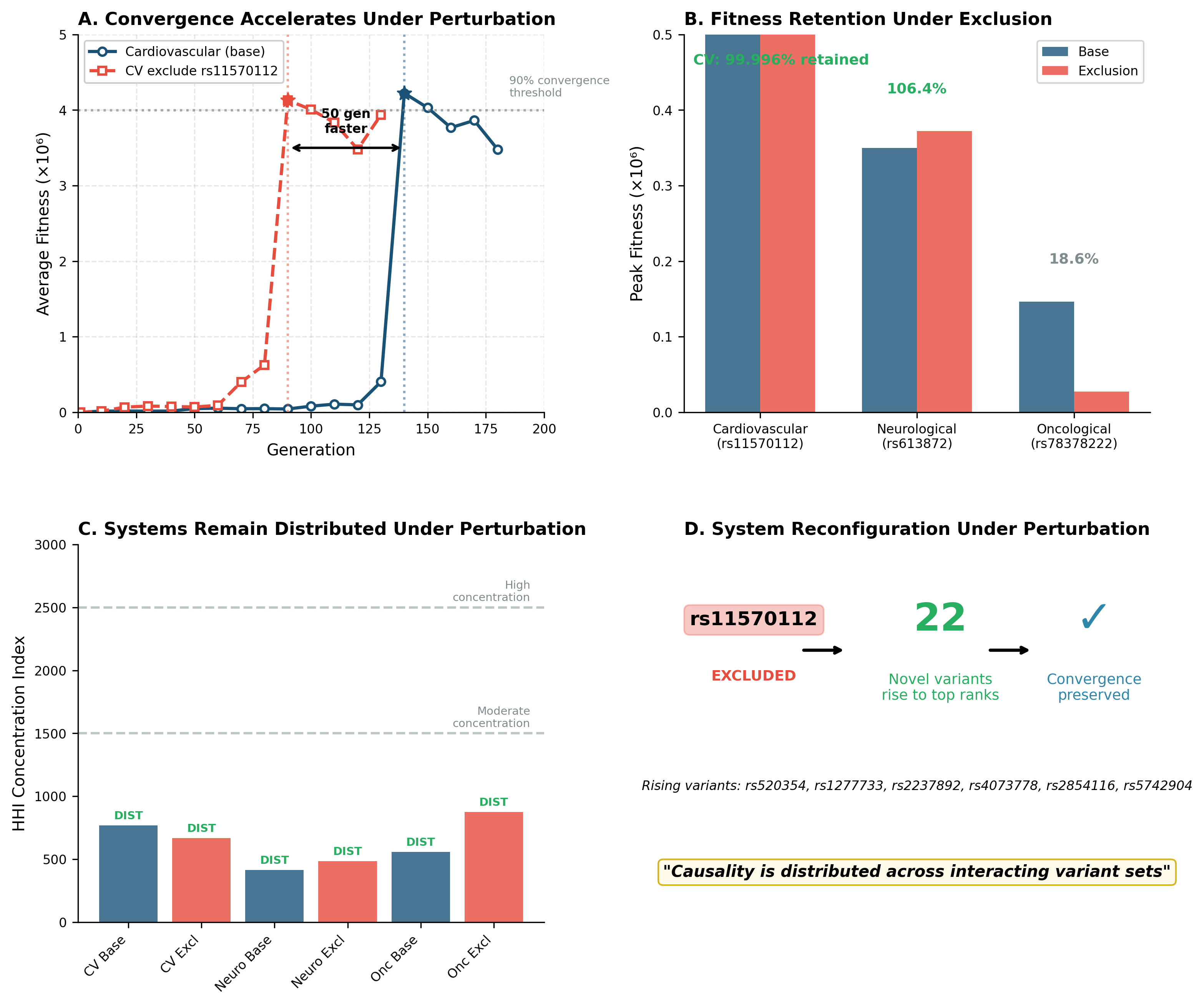
Across cardiovascular, oncology, renal, and neurological domains, we ran a simple experiment: remove the dominant genetic variants from a biological system and let it find a new equilibrium.
The assumption: the system collapses without its "driver."
The reality: the system reconfigures — and often converges faster.
→ 99.996% fitness retention after removing the top variant
→ 50 generations faster convergence
→ 29 novel variants emerged that weren't visible before
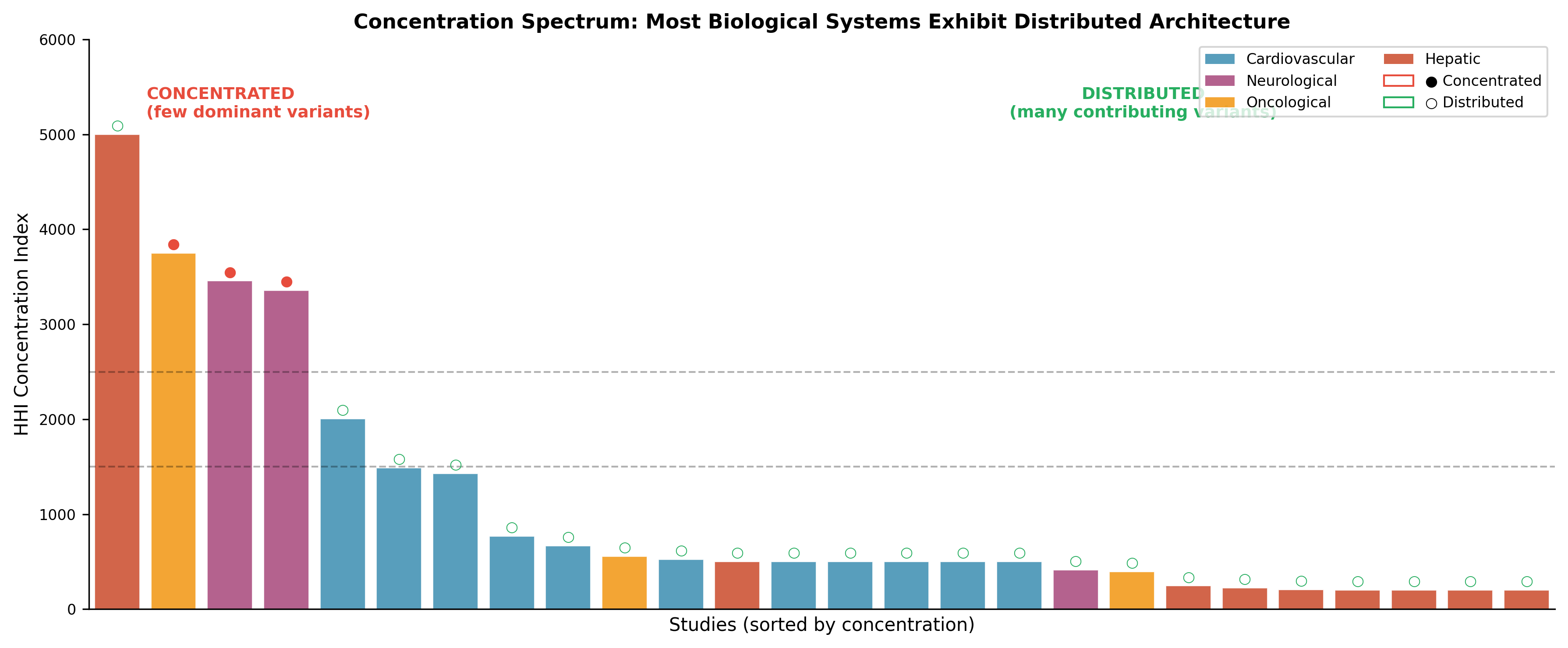
The dominant target wasn't a structural requirement. It was a concentration artifact. The system exhibits distributed constraint architecture — remove one node, others rise to preserve function.
This is what resistance looks like at the genomic level.
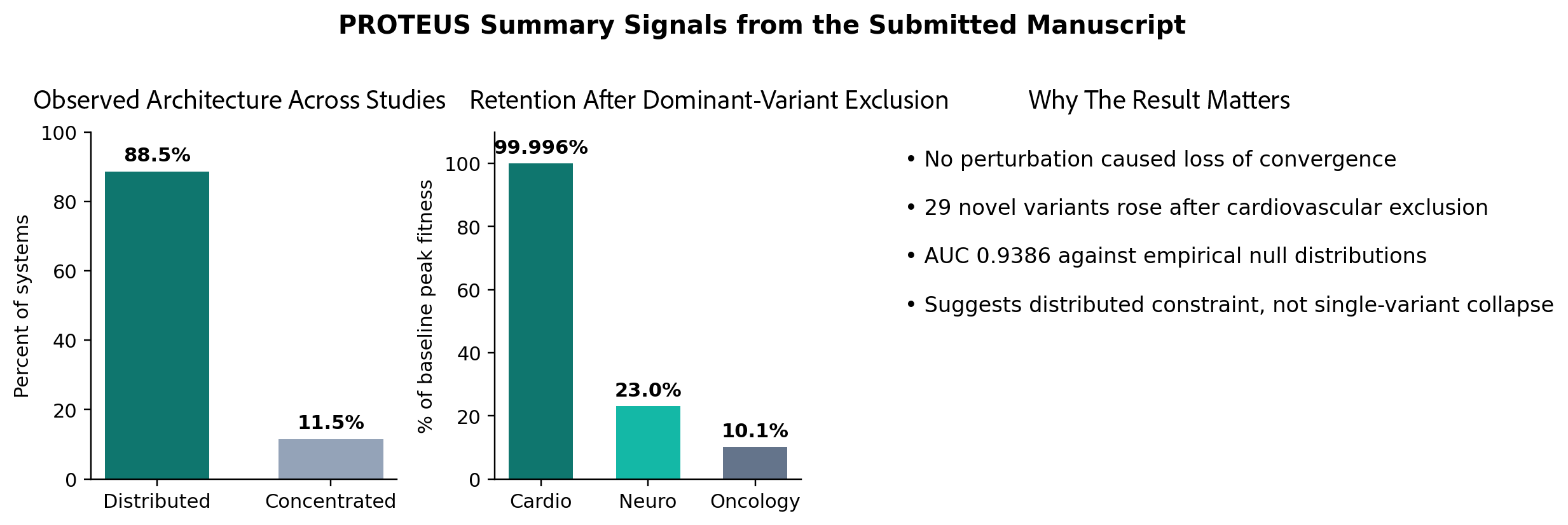
PROTEUS V3 identifies these convergent patterns computationally. Before target selection. Before IND. Before Phase I.
Deterministic simulation. 17M+ clinical assets. Reproducible results.
Nature-track manuscript in preparation.
If your pipeline keeps hitting resistance walls, the problem may not be the molecule. It may be the target.
#DrugDiscovery #PrecisionOncology #Pharma #Biotech #Genomics #DrugDevelopment #DeterministicConvergence #NomosLogic